

What it is
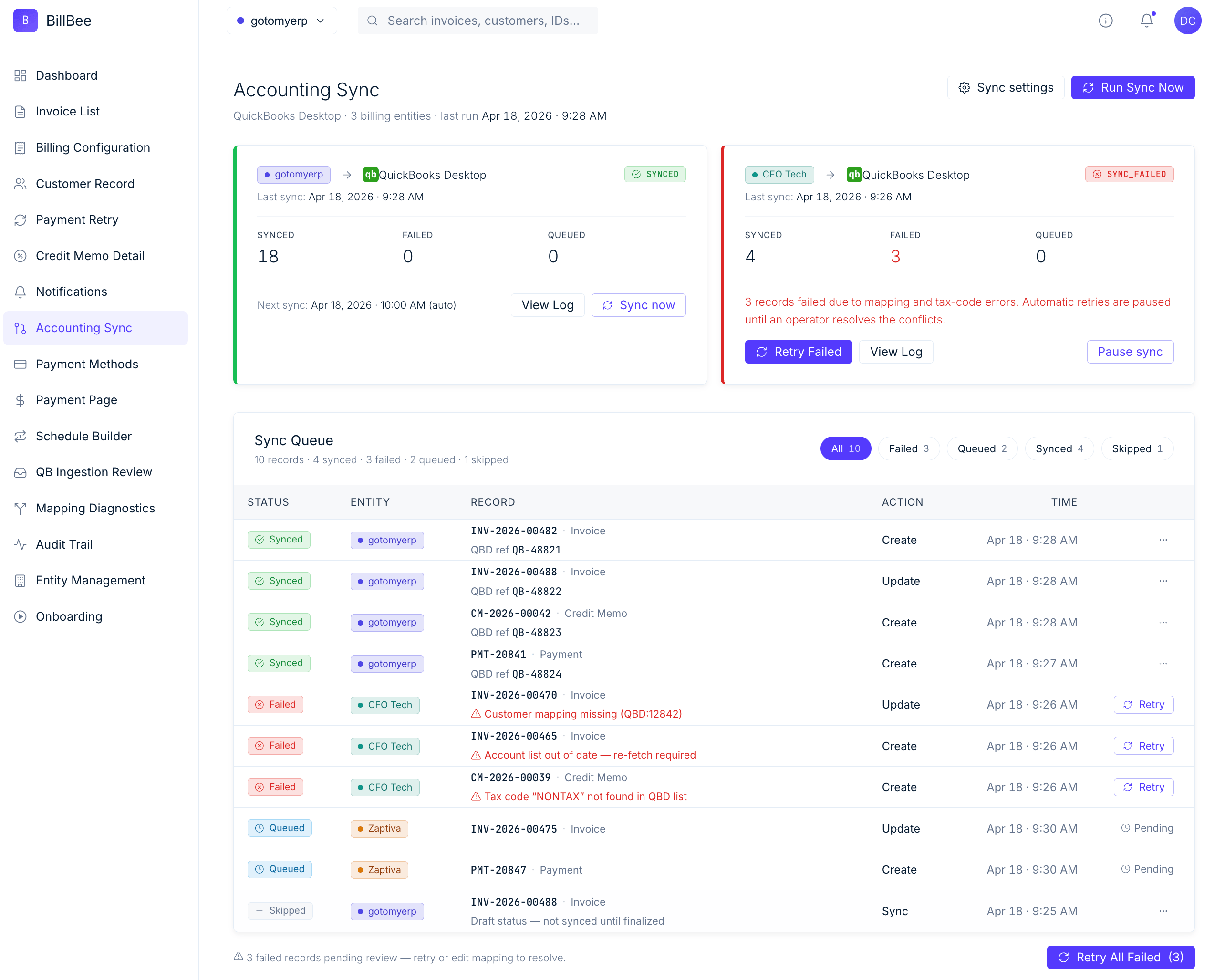
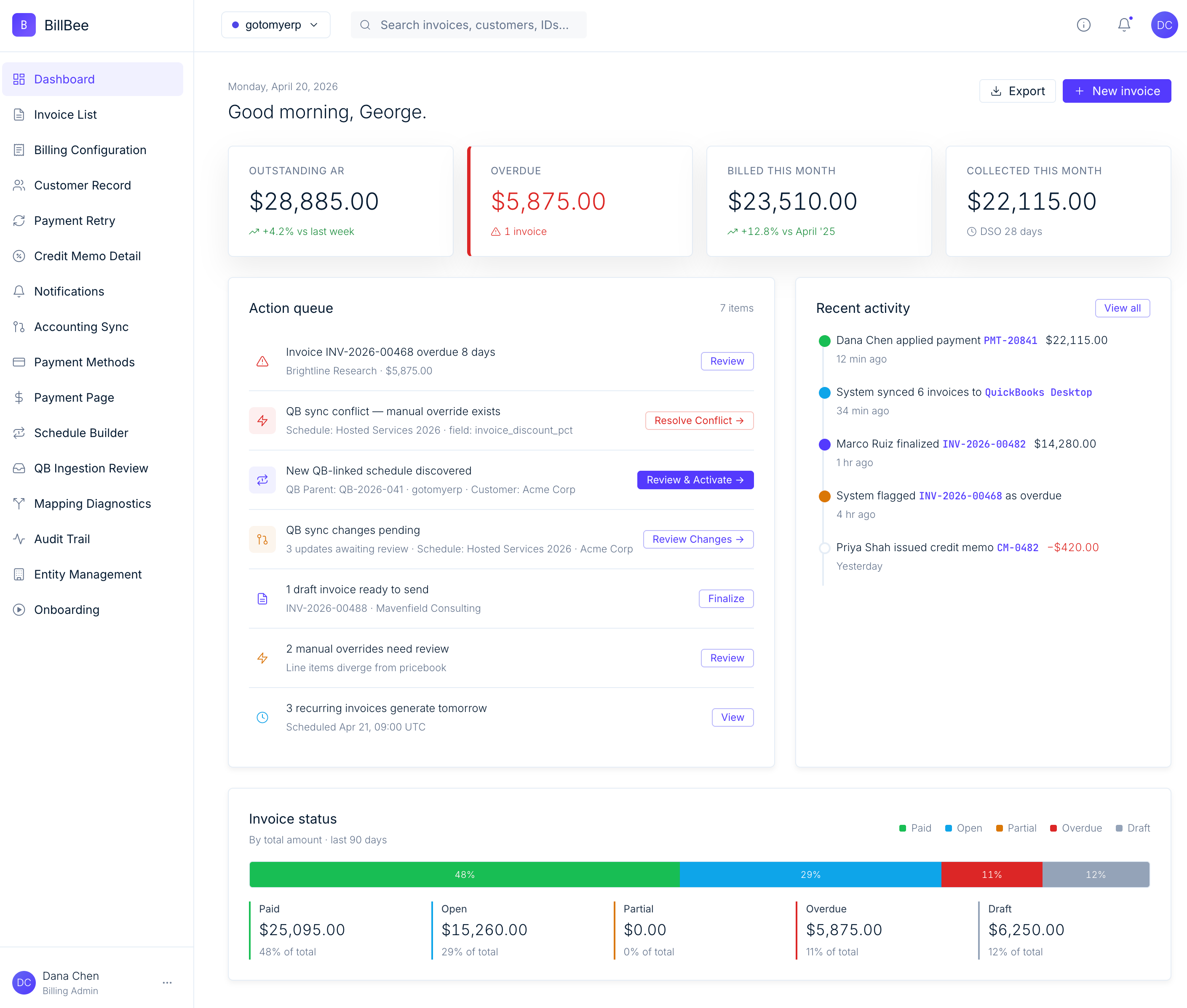
BillBee is a billing platform designed to own the full lifecycle — pricing, invoicing, payments, credit memos, and accounting sync — for service businesses that operate as several entities at once. It's built to stand on its own, with existing platforms as optional adapters rather than hard dependencies.
Why it exists
Multi-entity billing is where spreadsheets go to die: pricing logic hides in tabs, it's never clear which entity is selling versus billing, and accounting sync drifts. BillBee pulls the whole workflow into one place with a clear pricing hierarchy, explicit entity routing, and an auditable sync.
Who it's for
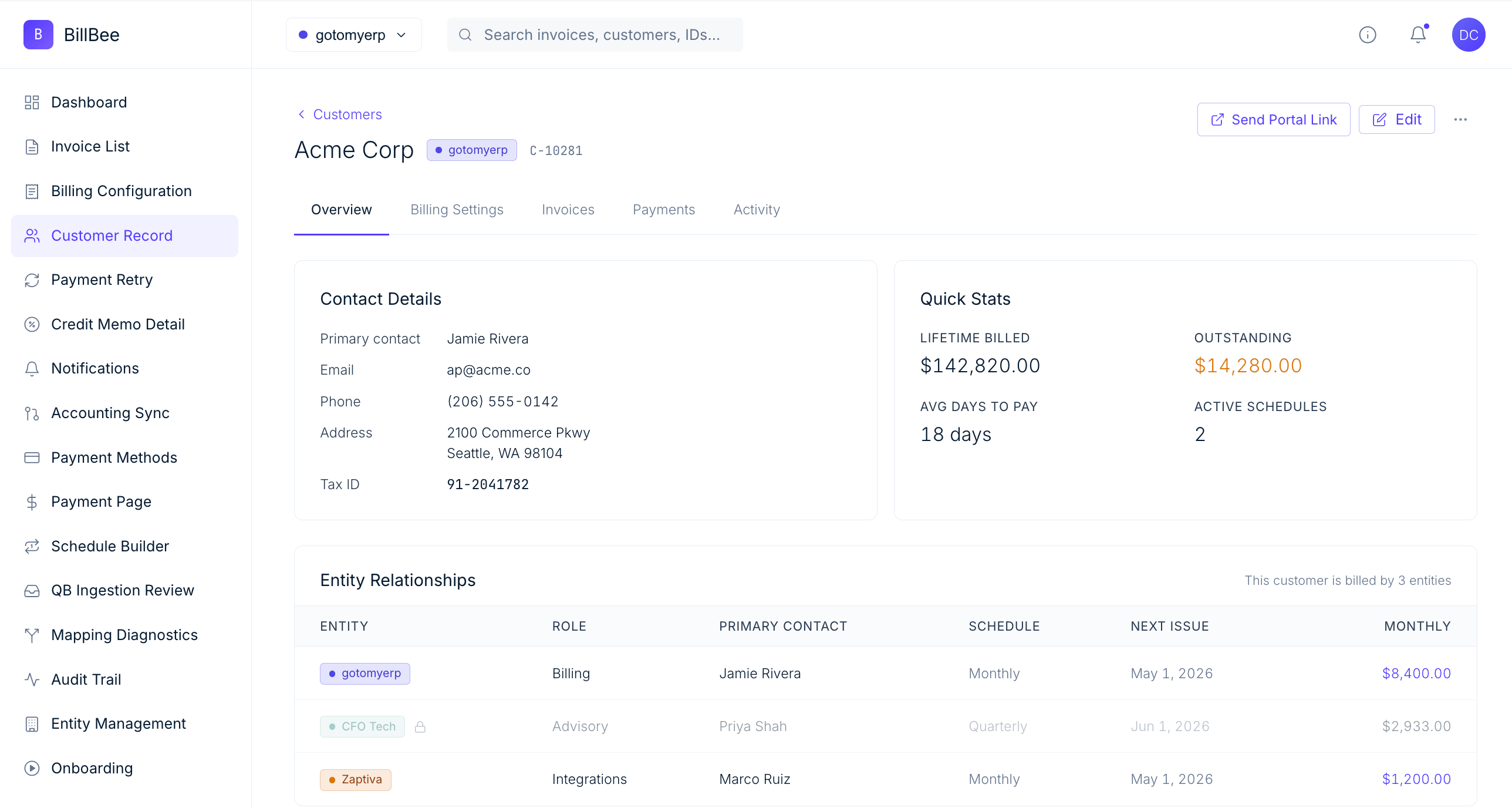
Billing administrators, AR staff, and controllers at service businesses running two or more entities — plus their customers, via a self-service portal.
What it does
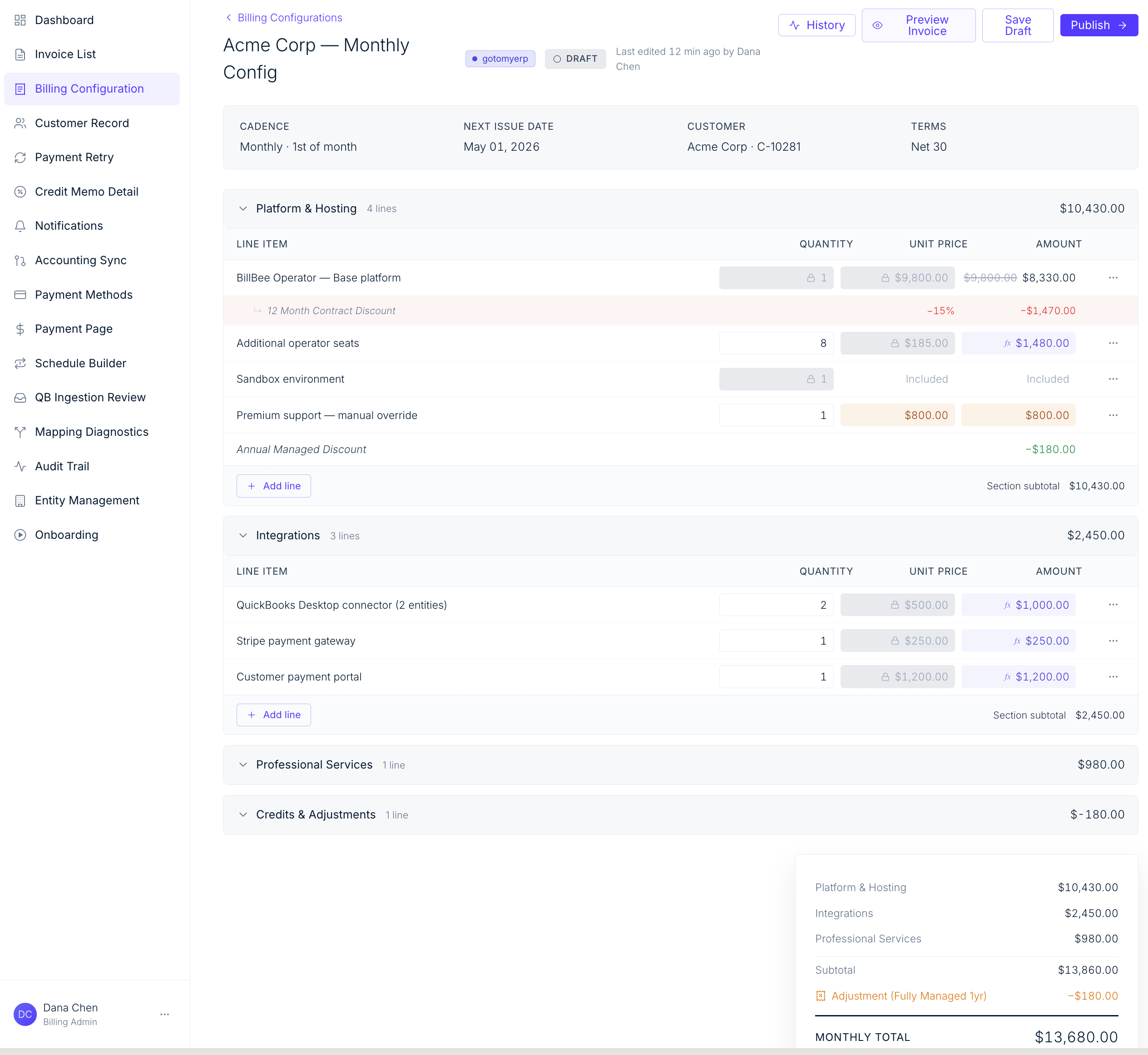
- A four-level pricing hierarchy (platform → entity → contract → line item)
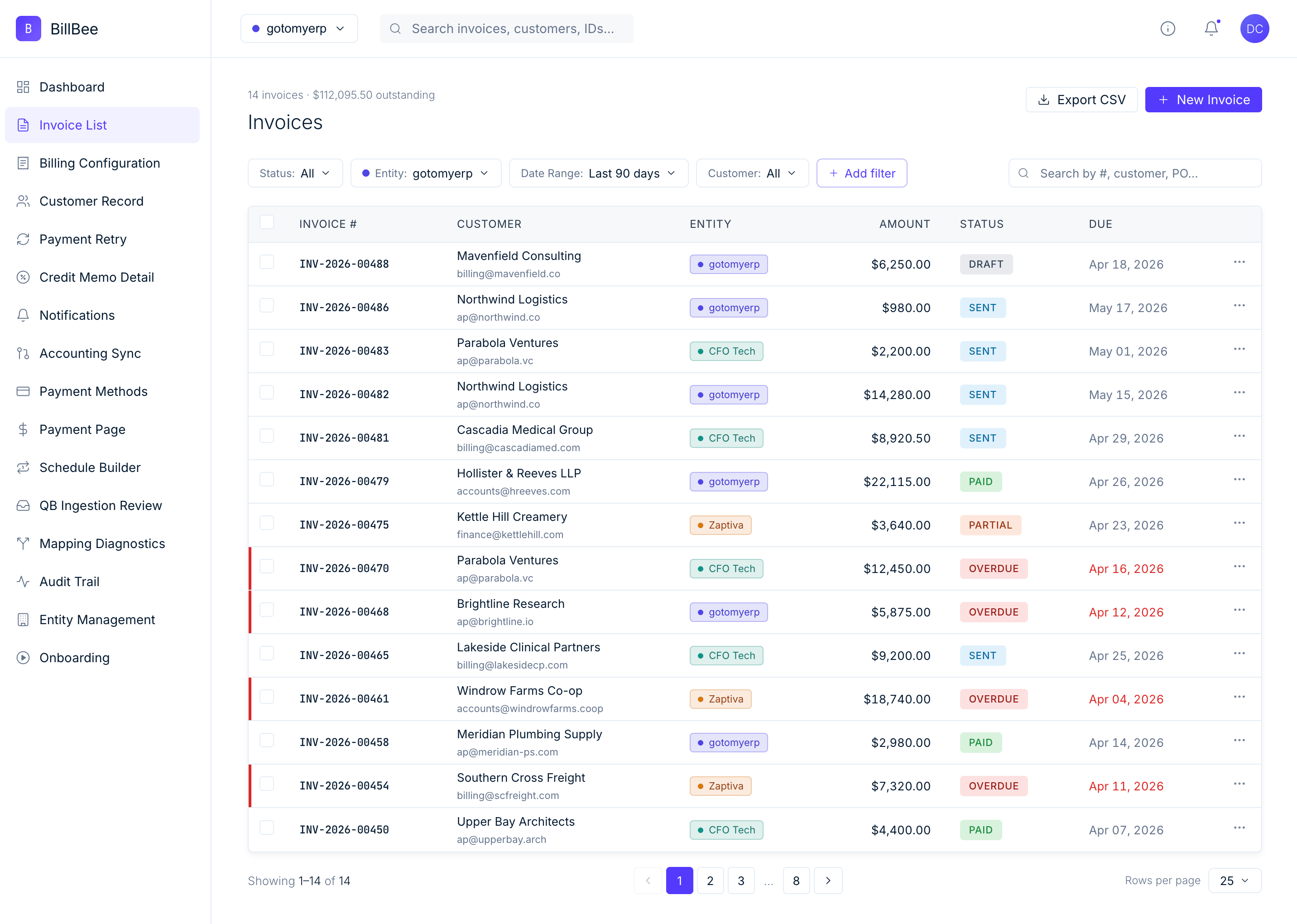
- Multi-entity invoicing with a clear selling-vs-billing distinction
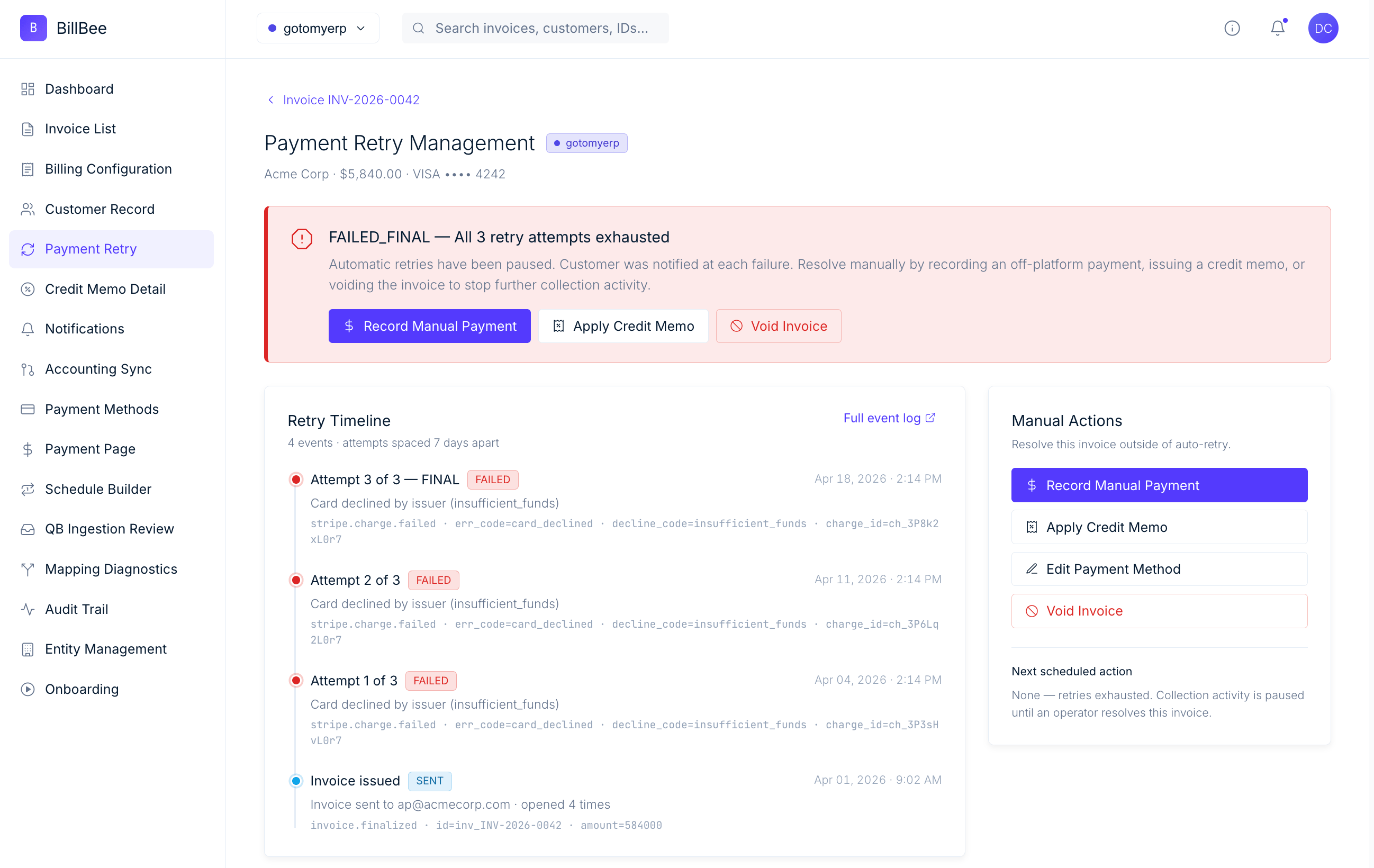
- Card and ACH payments with per-entity sub-accounts
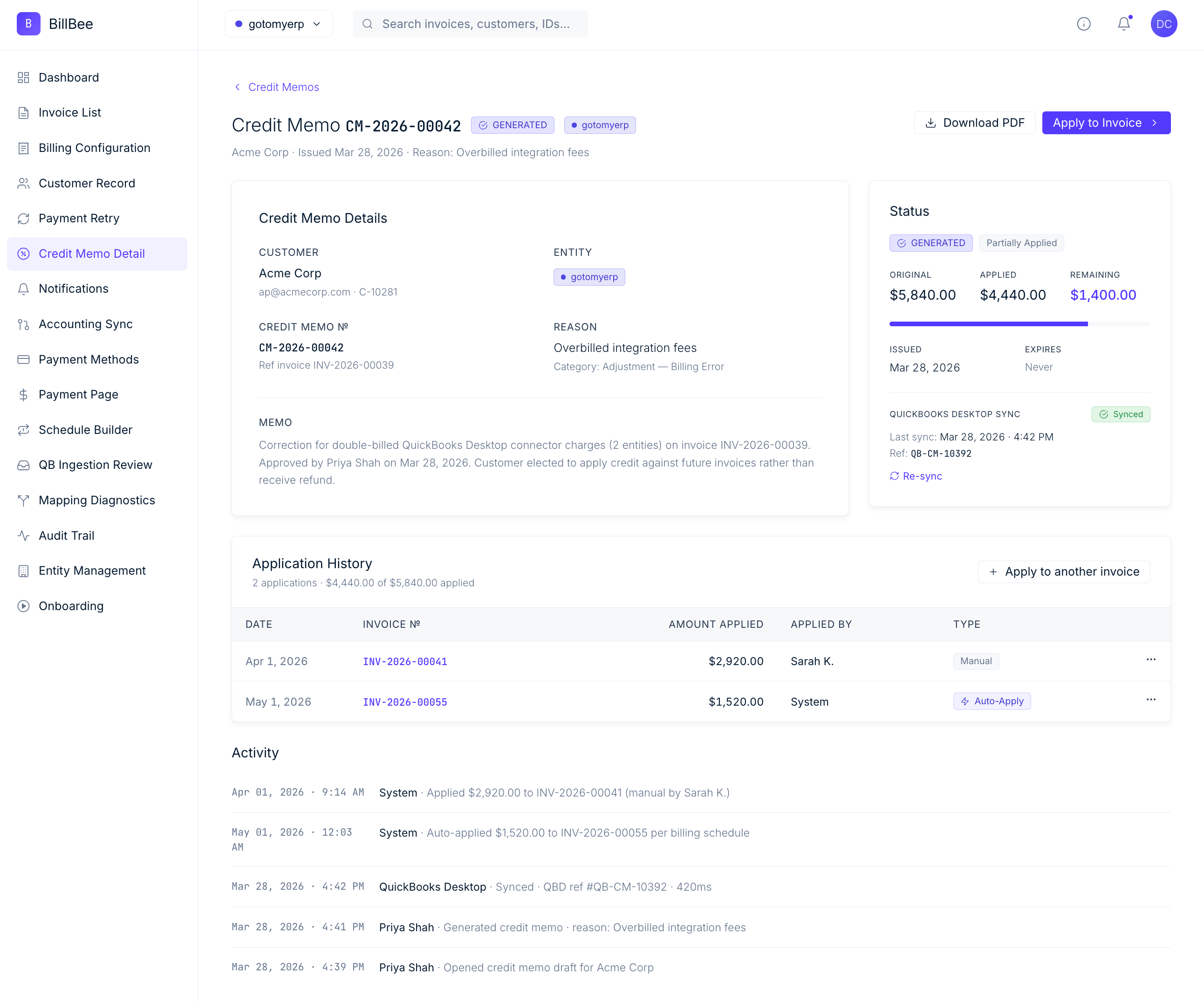
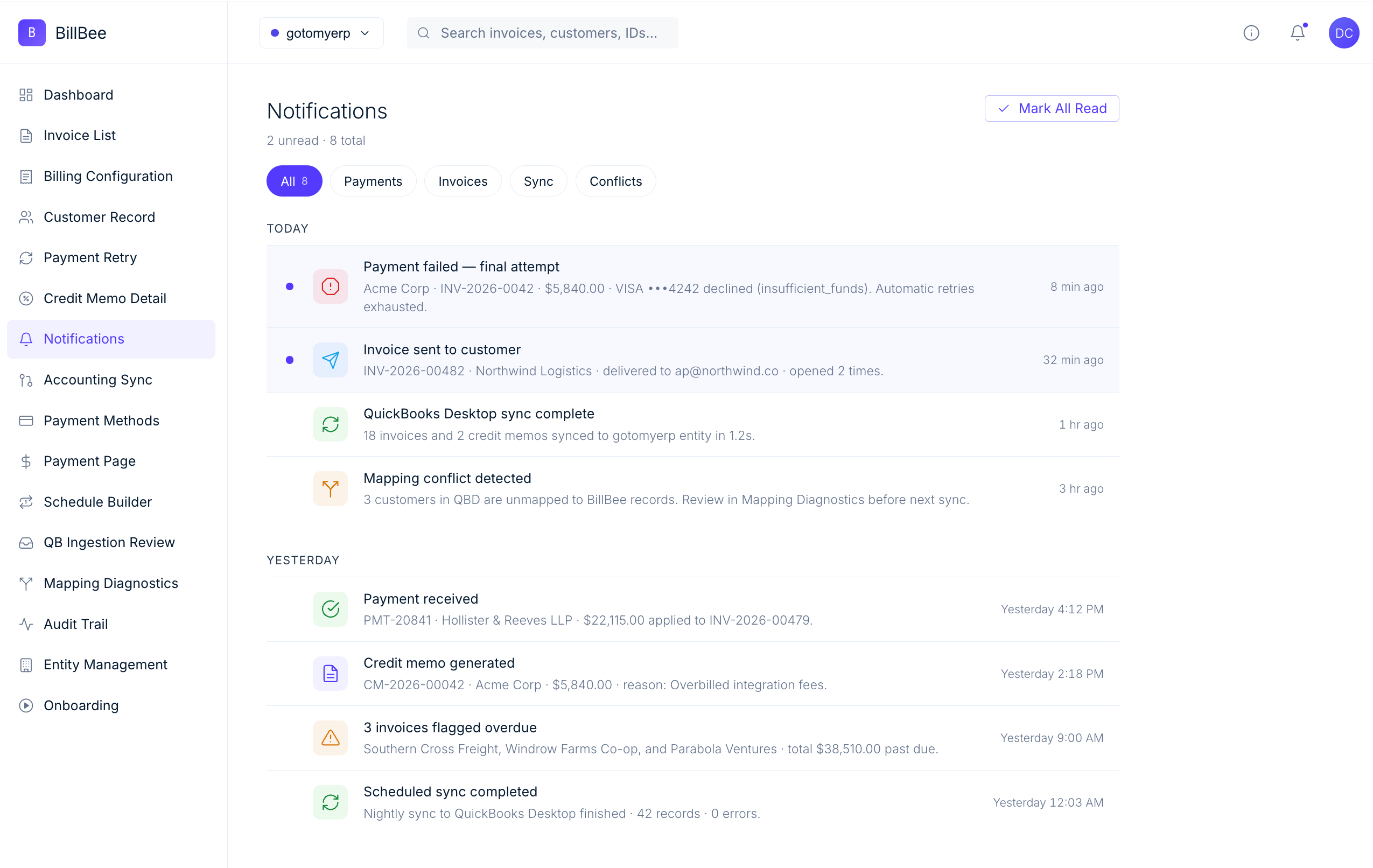
- A credit-memo state machine that syncs to desktop accounting
- Automated dunning and retry policies
- A branded, magic-link customer payment portal
How it works
What made it interesting to build
This one is fully designed and specced but not yet built — the documentation, data model, and UX prompts are complete, with engineering still ahead. The thorniest design decisions were around making historical pricing immutable (snapshotting the price at invoice time so old invoices never silently change), choosing the right multi-entity payment topology, and deciding how to keep desktop accounting in reliable sync.